

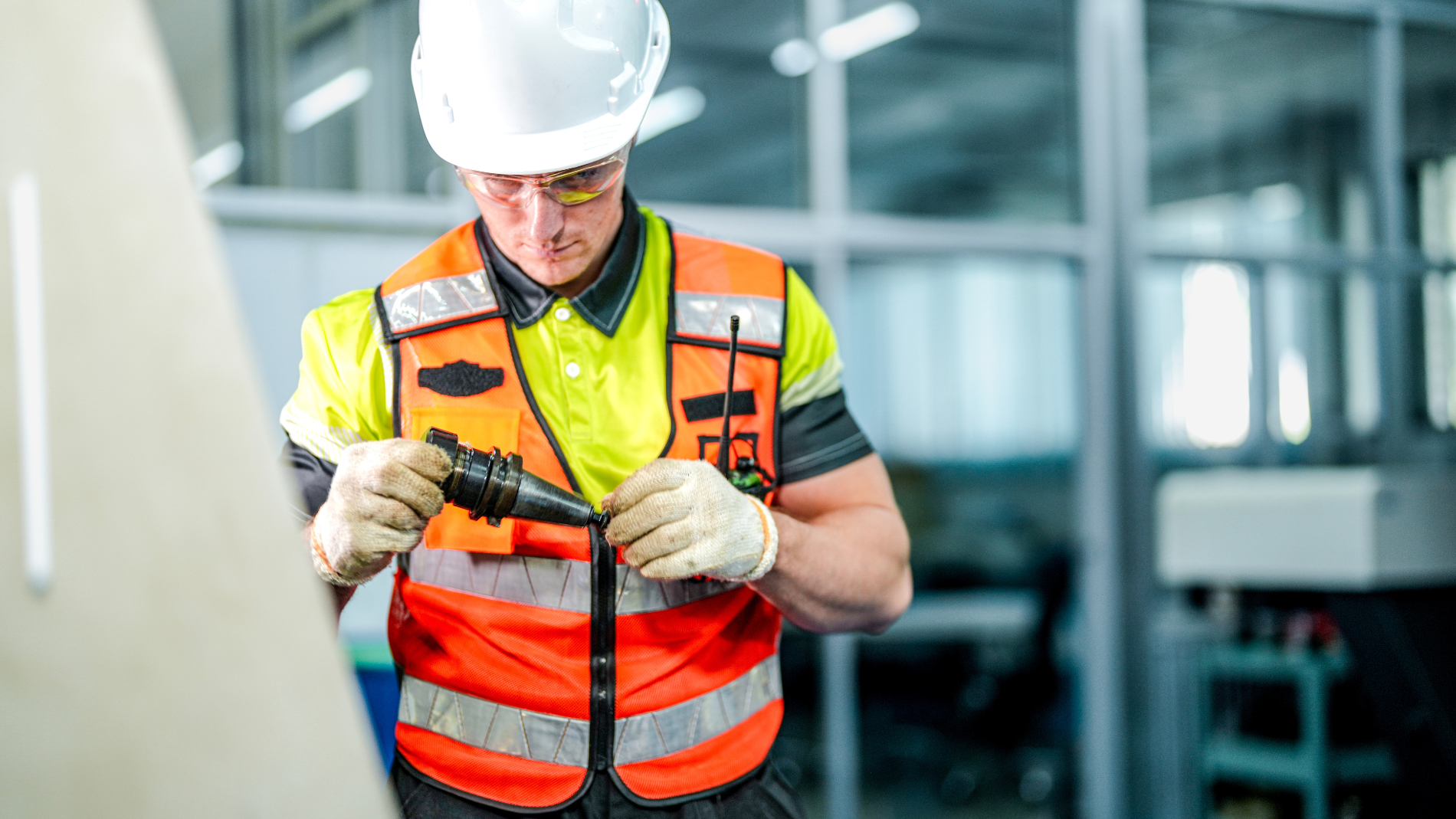
There was a time when personal protective equipment (PPE) was judged by a simple metric: did it provide adequate protection when something went wrong? Today, both the buyers and the wearers of PPE are asking more questions and demanding more comprehensive answers.
At construction sites, industrial facilities, energy assets, transport networks and critical infrastructure across the Middle East, organisations are redefining what workplace protection should achieve. Rather than acting as the final barrier between workers and hazards, the next generation of PPE is becoming an intelligent source of operational insight – capable of detecting risk, communicating in real time and helping prevent incidents before they occur.
This evolution reflects a much broader shift taking place across occupational safety. As AI, industrial IoT, advanced sensing and cloud analytics converge, PPE is becoming part of an integrated connected-worker ecosystem that enables organisations to move from reactive incident management towards predictive risk prevention.
The pace of change is increasing too. Market analysts expect the global smart PPE sector to sustain double-digit growth throughout the remainder of the decade, topping $9.5 billion by 2030. This significant uptick is being driven by increasing regulatory expectations, labour shortages and accelerating digital transformation across high-risk industries.
For safety leaders, the implications extend far beyond equipment procurement. The next competitive advantage lies in turning frontline safety into actionable intelligence.
Emergence of the connected worker
The concept of the "connected worker" has rapidly evolved from a pilot initiative into a strategic priority. Organisations are equipping frontline personnel with networks of connected devices that continuously monitor their environment, operational conditions, and a wide range of personal metrics (heart rate, core body temperature, hydration levels, etc). Smart PPE sits at the centre of this ecosystem, transforming helmets, respiratory protection, protective clothing and wearable devices into real-time data sources that can do more than keep workers alive when the worst-case scenario occurs.
Instead of relying on manual inspections or post-incident reporting, safety managers can receive continuous intelligence on environmental hazards, worker location, physiological wellbeing, equipment status and exposure levels.
This fundamentally changes how risk is managed. Rather than retroactively asking what happened, organisations can predict what might happen next and how they can intervene safely. That distinction alone represents one of the most significant shifts in occupational safety since PPE first became mandatory across many industrial sectors.
As we investigate the trends that are defining this new era of PPE, there are surprisingly few Middle East-headquartered manufacturers that have launched genuinely new, technologically advanced PPE products in recent years. Most innovation in the region is happening on the adoption side, while the actual products are still predominantly developed by global manufacturers like Honeywell, 3M, MSA Safety, Dräger, Blackline Safety, Guardhat and RealWear[TM1] . While the Middle East may not be at the forefront of the manufacturing side of this PPE revolution, it has no shortage of companies eager to enjoy the benefits of early adoption.
Five innovation trends defining the next generation of PPE
1. PPE is becoming predictive
The first wave of connected PPE focused largely on tracking location and improving communications. The next wave is focused on prediction.
Sensor-enabled helmets, connected respiratory protection and wearable environmental monitors are increasingly capable of identifying early warning signs of fatigue, heat stress, falls, hazardous gas exposure and abnormal worker behaviour.
When combined with AI-driven analytics, these data streams allow organisations to detect elevated risk before an incident escalates, creating opportunities for proactive intervention instead of reactive response. Recent research also highlights the growing role of AI-enabled wearables in supporting continuous health surveillance and hazard detection, while noting that successful adoption depends as much on trust and governance as on the technology itself.
The shift is already visible in the Middle East. In August 2025, ADNOC announced a multi-year rollout of up to 28,000 connected safety devices across its operations, combining wearable gas detection with real-time worker location services. Rather than treating gas monitors as standalone equipment, the programme integrates frontline protection into a connected safety ecosystem that improves emergency response, operational visibility and workforce resilience.
2. AI is becoming the intelligence layer
Artificial intelligence is quietly becoming one of the most influential technologies in workplace safety. Computer vision systems can verify PPE compliance automatically. Machine learning algorithms can identify unsafe movement patterns around heavy equipment. Digital assistants can analyse thousands of safety observations to identify emerging trends long before they become visible through conventional reporting.
Increasingly, AI is moving beyond automation towards decision support. Rather than replacing safety professionals, it enables them to prioritise inspections, allocate resources more effectively and focus attention where operational risk is genuinely increasing.
As industrial AI matures, connected PPE will become one component within much larger predictive safety platforms that integrate operational technology, environmental monitoring and workforce analytics.
Again, ADNOC is one of the Middle East’s leading adopters in this space, having recently awarded AI company AIQ a $340 million contract to deploy AI across its upstream operations. Although the programme covers broader operational optimisation, one of its explicit objectives is improving safety through real-time monitoring and operational intelligence. It shows that connected worker technologies are increasingly part of larger digital transformation programmes rather than isolated safety purchases.
3. Wearables are becoming invisible
One of the biggest barriers to wearable adoption has never been technology, but usability. Workers will often avoid wearing equipment that is too heavy, uncomfortable or interferes with their tasks.
Manufacturers are therefore placing equal emphasis on ergonomics as on digital capability. Miniaturised electronics, lower-power sensors and improved battery technology are enabling smart functionality to be embedded directly into helmets, eyewear, high-visibility clothing and respiratory protection without significantly increasing weight or complexity.
The objective is straightforward: smart PPE should feel no different from conventional equipment. As this design philosophy matures, adoption is likely to accelerate significantly across sectors where worker acceptance has historically limited digital transformation.
4. Inclusive PPE is becoming a strategic priority
The future of workplace safety is also more inclusive. Historically, much industrial PPE was designed around a relatively narrow range of body dimensions. Today's workforce is considerably more diverse, prompting manufacturers to rethink everything from sizing and ergonomics to thermal comfort and mobility.
This shift is not simply about representation. Poorly fitting PPE reduces compliance, increases fatigue and can compromise protection. Organisations increasingly recognise that equipment designed for different body types, genders and operational environments directly contributes to both productivity and safety performance.
Inclusive PPE is therefore moving beyond a procurement consideration to become an operational performance issue.
5. Hazmat protection is entering the digital era
The safe management of hazardous materials has always demanded some of the most technically sophisticated protective equipment. This makes it prime territory for smart PPE innovation.
Connected gas detection, biometric monitoring and digital exposure tracking are enabling incident commanders to build a far more complete operational picture during hazardous materials incidents.
Simultaneously, advances in protective fabrics are reducing heat stress while maintaining chemical resistance, allowing responders to operate safely for longer periods under demanding conditions. The result is better decision-making during complex incidents and richer operational data afterwards for training, compliance and continuous improvement.
From PPE to safety intelligence
Perhaps the most significant innovation is not a wearable device at all, but the data it collects and feeds into the greater operational overview.
Every connected helmet, smart respirator, environmental sensor and wearable device contributes to a growing stream of operational intelligence that organisations can analyse to improve safety performance across entire facilities.
With the whole operational picture clearly in view, patterns begin to emerge. Which tasks generate the greatest heat stress? Which shifts experience the highest fatigue risk? Which work zones consistently produce near misses? Where should training resources be concentrated?
These insights allow organisations to shift safety management from periodic audits towards continuous optimisation. Increasingly, PPE is becoming part of the enterprise data architecture alongside operational technology, maintenance systems and digital twins.
Safety is no longer isolated from business intelligence. It is now an intrinsically important source of business intelligence.
A strategic investment, not a compliance expense
As economic uncertainty continues, organisations remain under pressure to scrutinise capital and operational expenditure. Yet treating next-generation PPE purely as a procurement cost increasingly overlooks its broader strategic value.
Connected safety technologies reduce downtime, strengthen regulatory compliance, improve operational resilience and help protect one of every organisation's most valuable assets: its people.
In sectors facing persistent skills shortages, retaining experienced workers has become as important as recruiting them. Preventing injuries therefore delivers benefits that extend well beyond compliance metrics, protecting productivity, institutional knowledge and organisational reputation.
The conversation around PPE is consequently changing. At Intersec Global, and more broadly, it is no longer limited to purchasing better helmets, gloves or protective clothing; today’s leading proponents of smart PPR are investing in systems that generate better decisions that will help them create future-ready workplace protection. As we look towards the remainder of 2026 and towards the next edition of the show in early 2027, the consensus is that PPE is evolving from passive protection into intelligent infrastructure – connected, predictive and increasingly indispensable to modern risk management.